
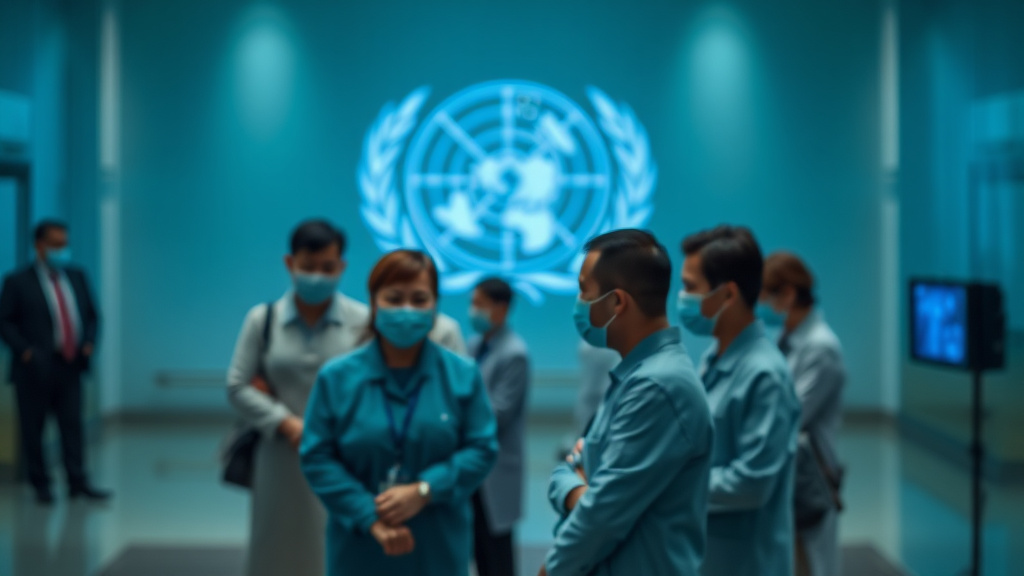
In a significant move to counter the growing threat of epidemic diseases across the world, the World Health Organization has introduced an ambitious new effort intended to strengthen international disease tracking and swift response capacity. This broad-based effort is designed to tackle significant shortcomings in pandemic preparedness, enhance rapid identification mechanisms, and improve coordination among nations. By combining resources and technical capability, the WHO aims to avert emerging outbreaks from developing into severe worldwide health crises, potentially protecting millions of lives.
International Response Strategy
The WHO’s new initiative develops a integrated system that enables nations to coordinate efforts in fighting communicable disease challenges. By developing uniform procedures and data pathways, countries can transmit vital epidemiological data in instantaneous manner, allowing rapid recognition of novel infectious agents. This integrated strategy enhances the worldwide disease prevention systems, confirming that assets are allocated efficiently and strategically to limit transmission before they spread across borders and continents.
Central to this strategy is the establishment of regional response centers equipped with cutting-edge diagnostic equipment and skilled staff. These hubs will serve as first-line defense systems, offering immediate technical support and guidance to impacted countries. The initiative focuses on institutional strengthening in resource-limited areas, where resources are typically scarce, ensuring equitable access to monitoring systems and crisis management knowledge. Through this collaborative framework, the WHO aims to establish a truly interconnected international health infrastructure.
The program also focuses on funding for advanced technology plus artificial intelligence for outbreak tracking. Machine learning algorithms will analyze vast datasets to forecast disease spread patterns and identify potential hotspots prior to case emergence. This proactive approach marks a paradigm shift from responsive actions to disease prevention measures. Improved monitoring networks will observe genetic variations and transmission patterns, enabling medical authorities to refine actions swiftly and effectively.
Additionally, the WHO dedicates itself to strengthening partnerships with commercial partners, research universities, and civil society groups. This partnership framework drives advancement in immunization creation, disease detection, and treatment options. By removing barriers between public health authorities and research entities, the initiative advances scientific progress and guarantees quick implementation of solutions. Clear and honest information exchange increases public confidence and improves community engagement in disease prevention efforts.
Implementation and Key Components
The WHO’s initiative works within a multi-layered system combining digital advancement, global collaboration, and resource allocation. This planned methodology incorporates established observation frameworks with emerging technological tools, allowing instantaneous data transmission internationally. By setting defined standards and budgetary frameworks, the organization ensures participating nations can deploy extensive outbreak tracking networks. The initiative prioritizes at-risk areas, reinforcing medical systems where disease spread pose the greatest risk to international stability.
Initial Identification Methods
Advanced surveillance technology forms the backbone of the WHO’s rapid identification framework. The program deploys AI and automated analysis algorithms to examine health data trends, detecting potential disease spread before they propagate widely. Laboratories across participating nations receive enhanced tools and training to improve diagnostic accuracy. This interconnected system enables rapid identification of new pathogens, allowing health authorities to establish containment measures promptly and effectively.
The initial detection framework also prioritizes community engagement and community-based reporting channels. Healthcare workers in remote areas are trained to detect abnormal health indicators and report findings through secure digital channels. The WHO delivers immediate guidance and support to on-ground teams, creating a agile network. This community-based strategy ensures outbreaks are discovered at their point of emergence, maximizing intervention effectiveness and limiting disease transmission.
Immediate Response Groups
Specialized rapid response teams are prepared to deploy within forty-eight hours of outbreak confirmation. These multidisciplinary units consist of epidemiologists, lab experts, logisticians, and public information specialists. Teams complete comprehensive training in outbreak assessment, sample gathering, and applied epidemiology. The WHO keeps pre-positioned equipment and supplies in strategic locations worldwide, ensuring teams can immediately address new outbreaks with minimal delays.
Response teams collaborate closely with national health authorities and grassroots organizations, honoring cultural considerations while implementing necessary containment measures. Training stresses transparency and public communication to sustain public confidence during crises. The initiative incorporates mental health services for team members working in high-threat conditions. Continuous evaluation and feedback discussions strengthen procedures, making certain each response produces important insights for upcoming deployments.
- Send epidemiologists in under two days internationally
- Execute field investigations and specimen collection operations
- Work with local health authorities and governments
- Offer real-time analytical data and disease surveillance
- Establish containment protocols and preventive measures
Anticipated Results and Long-term Effects
The WHO’s effort is expected to deliver significant results over the next five years. Improved monitoring systems will enable faster discovery of new infectious agents, substantially decreasing response times. Countries implementing these protocols can expect enhanced disease surveillance capacity and better-equipped laboratories. The initiative is designed to implement standardized reporting mechanisms across all participating nations, establishing a cohesive global network. Initial assessments suggest that quick-response procedures could stop up to 80% of anticipated outbreaks from becoming pandemics, fundamentally reshaping how the world manages disease-related threats.
Looking ahead, this initiative promises to establish a new standard for worldwide health collaboration and preparedness. By allocating resources to infrastructure, training, and technological exchange, the WHO envisions a future where communicable illnesses are contained swiftly at their source. Member nations will benefit from pooled research information, coordinated vaccine development strategies, and strengthened healthcare systems. The long-term impact extends beyond disease prevention to building resilient health systems capable of resisting future health threats, ultimately fostering a protected international community for all populations and generations to come.
